It’s 5:00 AM. The cattle are waiting, and you’re in the cab of your wheel loader, staring down a mountain of packed silage. Making the right Standard Lift vs High Lift Wheel Loader choice is critical for your daily efficiency.
Introduction
You need power to dig into the pile, but you also need height to clear the wall of your vertical TMR mixer. Every feedlot operator knows this balancing act. You need a machine that can dig like a badger but reach like a giraffe.
The industry’s traditional answer to the height problem has been the “High Lift” loader configuration. But when you opt for those longer loader arms, what are you giving up in return?
At Shimek Industries, we believe in looking at the whole picture.
Let’s break down the debate between Standard Lift vs High Lift Wheel Loader configurations, analyze the specs—including the crucial “Breakout Force”—from the top three brands, and introduce a solution that gives you the best of both worlds.
Standard Lift vs High Lift Wheel Loader: Defining the Contenders
Before looking at the numbers, let’s clarify what we are comparing.
- Standard Lift (Z-Bar): The stock configuration. It is engineered for maximum digging performance and stability, keeping the load closer to the machine’s center of gravity.
- High Lift (XR / High Reach): The manufacturer installs longer lift arms to raise the hinge pin height.
- Hinge Pin Height: The absolute maximum height of the bucket pivot point. (Note: Actual dump clearance under a tilted bucket is 1.5 to 2.5 feet lower.)
- Breakout Force: The maximum upward force the loader can exert at the bucket cutting edge while on the ground. This is your ability to pry into a frozen or tightly packed silage pile.
The Comparison Charts: Case vs. Deere vs. Cat
We analyzed specifications for the three most common size classes used in agriculture. We looked at how much height you gain with High Lift versus how much digging power (Breakout Force) you might lose.
Disclaimer: Specifications are approximate based on manufacturer data for recent representative models (e.g., G-Series, P-Tier, M-Series) equipped with general purpose buckets. Specs vary significantly based on exact configuration, tires, and counterweights. Always consult your dealer for specific measurements.
The 3-Yard Class (Approx. 2.5 – 3.25 yd³ capacity)
In this compact class, gaining a foot of height often means sacrificing huge amounts of digging power. Look at the drop in breakout force for some models.
| Brand & Model | Configuration | Hinge Pin Height | Breakout Force | The Trade-Off |
| Case 521 | Standard | 11′ 10″ | ~20,900 lbs | Baseline |
| High Lift | 13′ 0″ | ~20,800 lbs | +14″ Height / No significant gain | |
| John Deere 524 | Standard | 12′ 6″ | ~19,500 lbs | Baseline |
| High Lift | 13′ 7″ | ~17,500 lbs | +13″ Height / -2,000 lbs Breakout | |
| Cat 926 | Standard | 12′ 8″ | ~23,300 lbs | Baseline |
| High Lift | 13′ 9″ | ~21,000 lbs | +13″ Height / -2,300 lbs Breakout |
The 4-Yard Class (Approx. 3.5 – 4.25 yd³ capacity)
The bread-and-butter size for many operations. The trend continues: you gain reach, but the longer arms change the leverage, reducing your ability to pry.
| Brand & Model | Configuration | Hinge Pin Height | Breakout Force | The Trade-Off |
| Case 621 | Standard | 12′ 10″ | ~26,300 lbs | Baseline |
| High Lift | 14′ 2″ | ~26,700 lbs | +16″ Height / Nominal change | |
| John Deere 544 | Standard | 12′ 10″ | ~24,000 lbs | Baseline |
| High Lift | 14′ 3″ | ~21,900 lbs | +17″ Height / -2,100 lbs Breakout | |
| Cat 930 | Standard | 13′ 1″ | ~28,900 lbs | Baseline |
| High Lift | 14′ 9″ | ~25,700 lbs | +20″ Height / -3,200 lbs Breakout |
The 5-Yard Class (Approx. 4.5 – 5.5 yd³ capacity)
For moving serious tonnage. Even big machines suffer performance losses when equipped with longer arms.
| Brand & Model | Configuration | Hinge Pin Height | Breakout Force | The Trade-Off |
| Case 721 | Standard | 13′ 6″ | ~33,000 lbs | Baseline |
| High Lift | 15′ 0″ | ~32,500 lbs | +18″ Height / Slight decrease | |
| John Deere 624 | Standard | 13′ 3″ | ~31,500 lbs | Baseline |
| High Lift | 14′ 8″ | ~28,500 lbs | +17″ Height / -3,000 lbs Breakout | |
| Cat 938 | Standard | 13′ 5″ | ~35,000 lbs | Baseline |
| High Lift | 15′ 1″ | ~31,000 lbs | +20″ Height / -4,000 lbs Breakout |
The Real Cost of High Lift
As the charts demonstrate, that extra 14 to 20 inches of reach isn’t free.
- You Lose Digging Power: Physics dictates that longer arms act as different levers. On many models, you sacrifice thousands of pounds of breakout force. That means struggling more with packed bunks and putting more strain on the drivetrain to get a full bucket.
- The Upfront Cost: High Lift configurations typically add $5,000 to over $15,000 to the machine’s purchase price.
- Reduced Stability: High lift machines carry the load further from the center of gravity, making them significantly less stable (“tippier”) with heavy rations.
- Increased Wear: Longer arms magnify stress on pins, bushings, and hydraulic cylinders, leading to faster wear and earlier repair bills.
The Smarter Solution: The Shimek Ejector Bucket
What if you could keep the maximum breakout force, stability, and lower price tag of a standard lift loader, but still easily fill your tall TMR mixer?
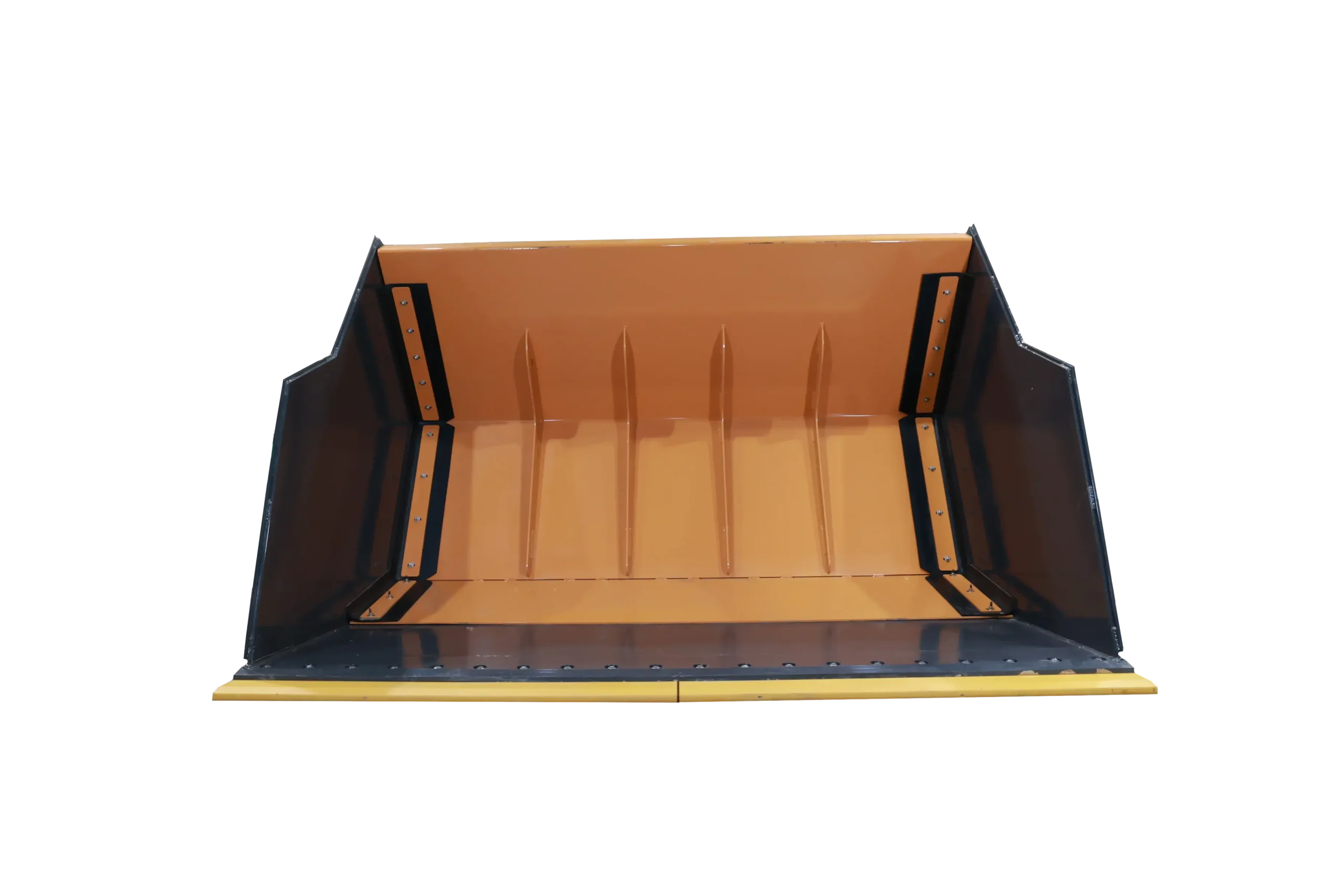
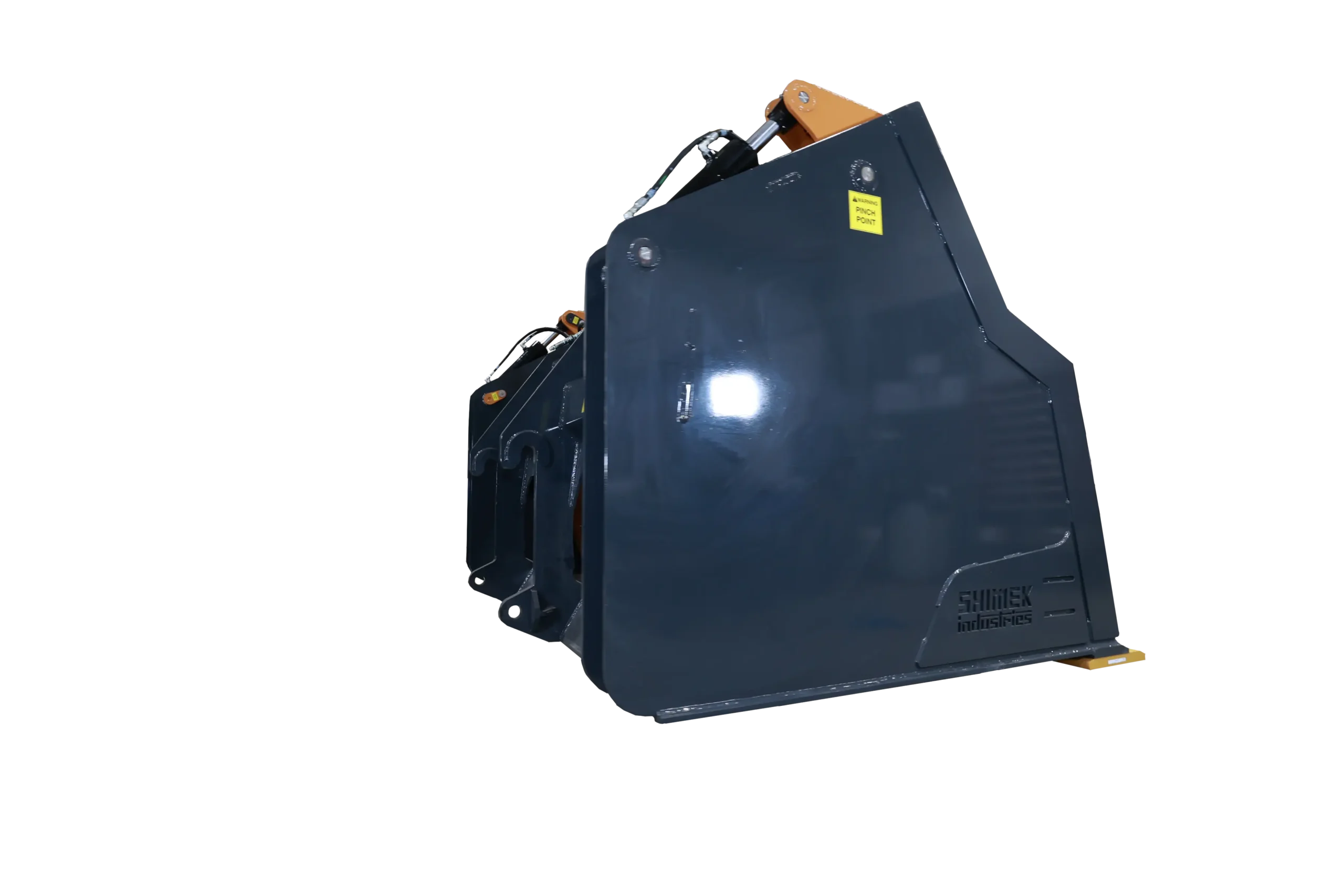
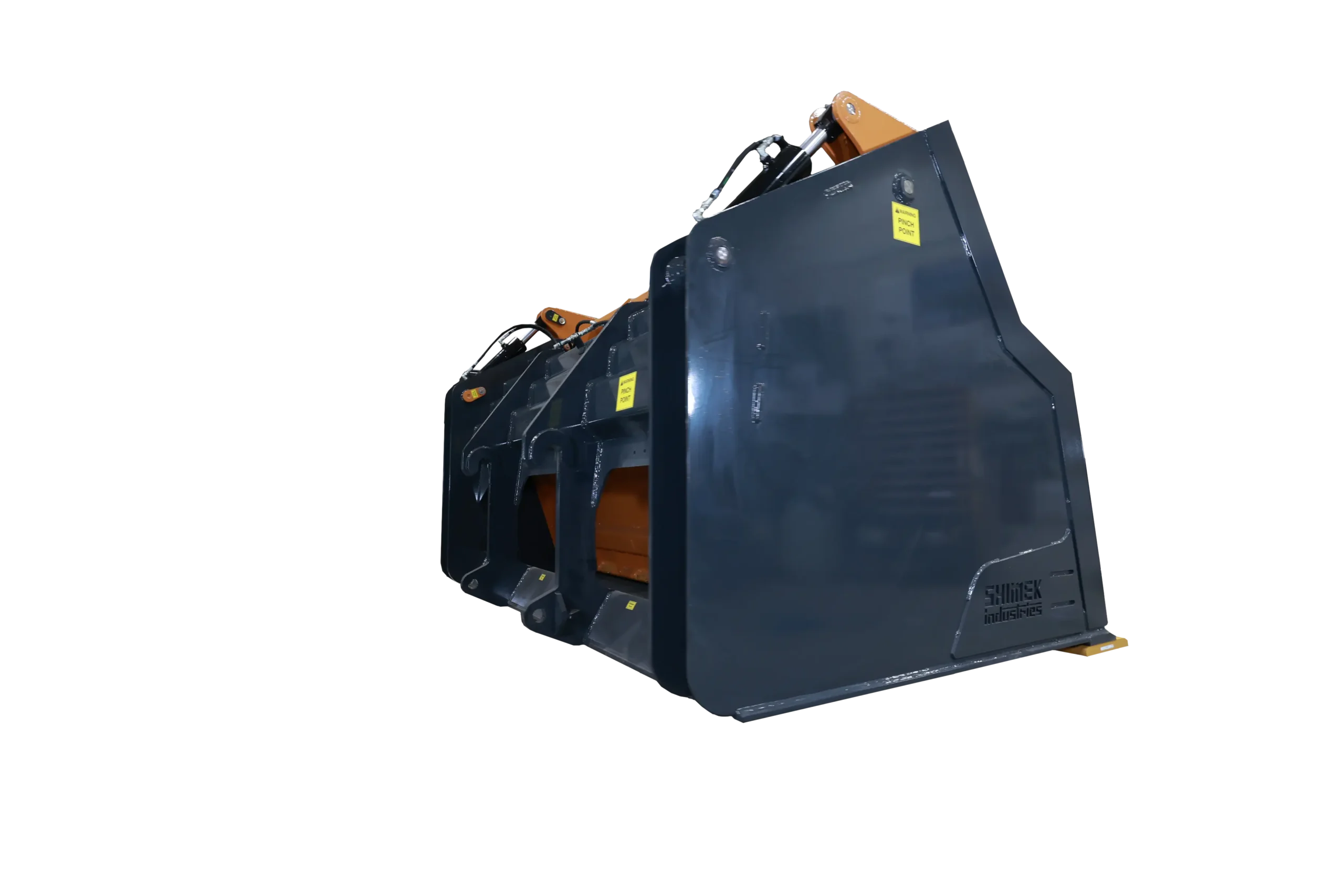
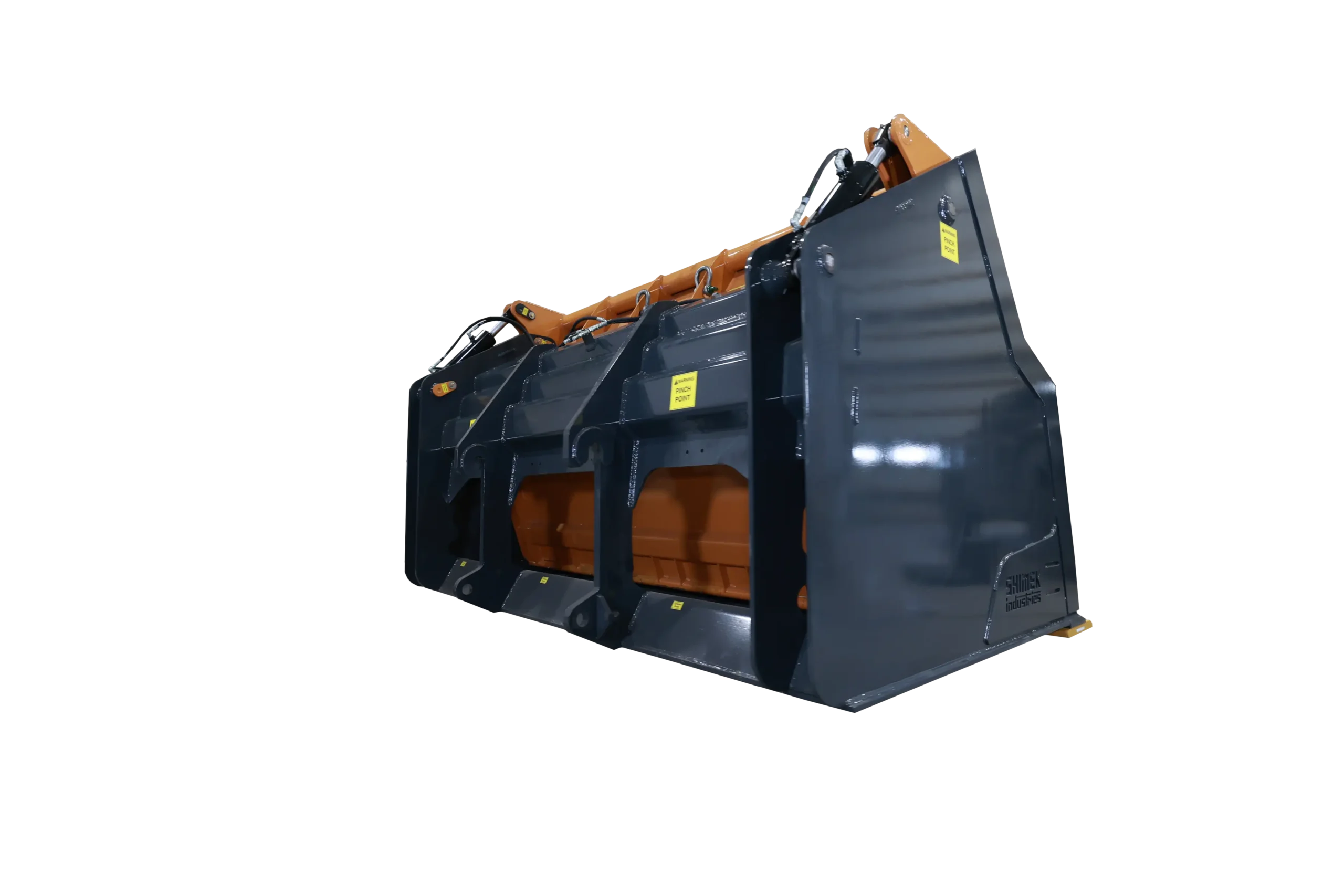
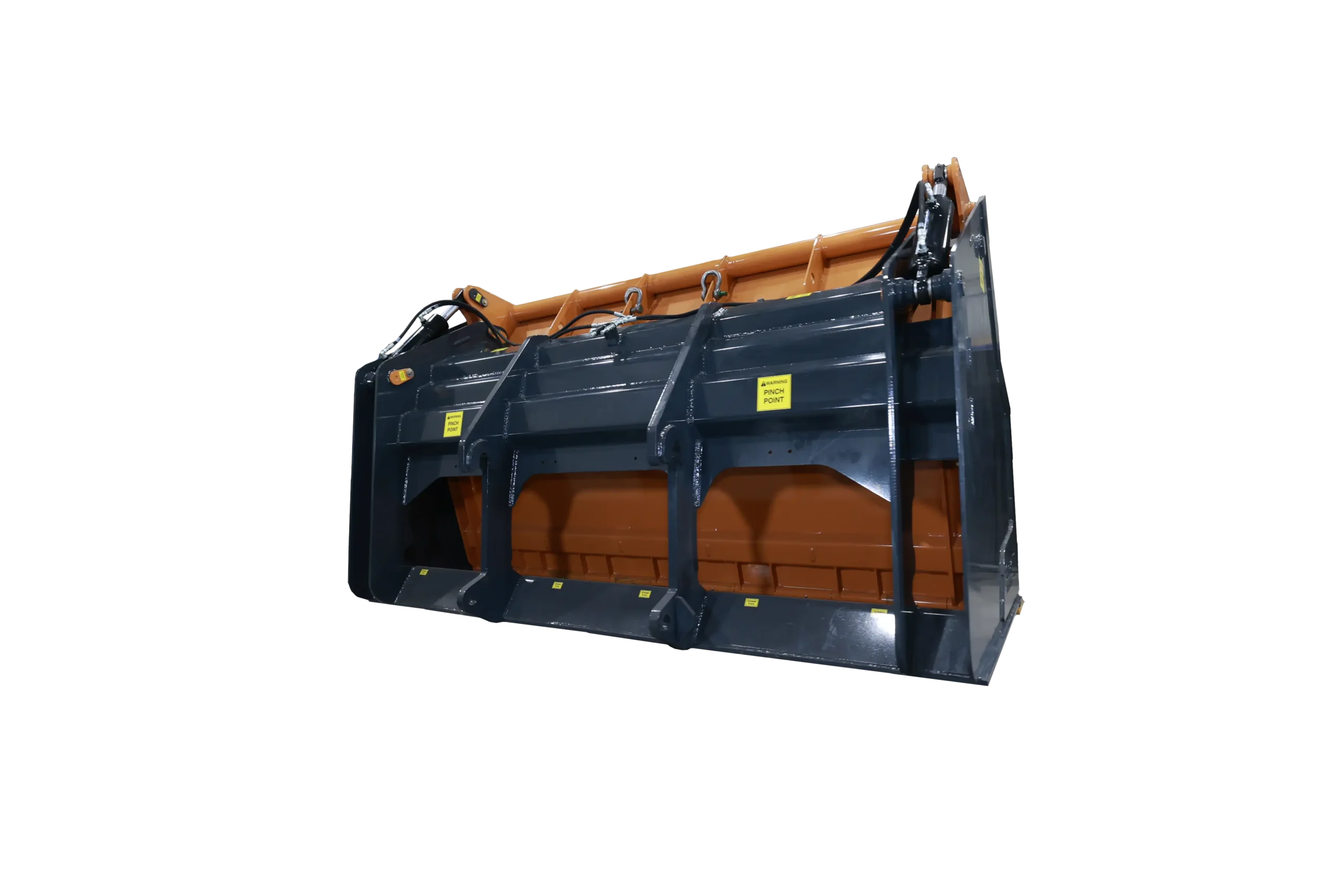
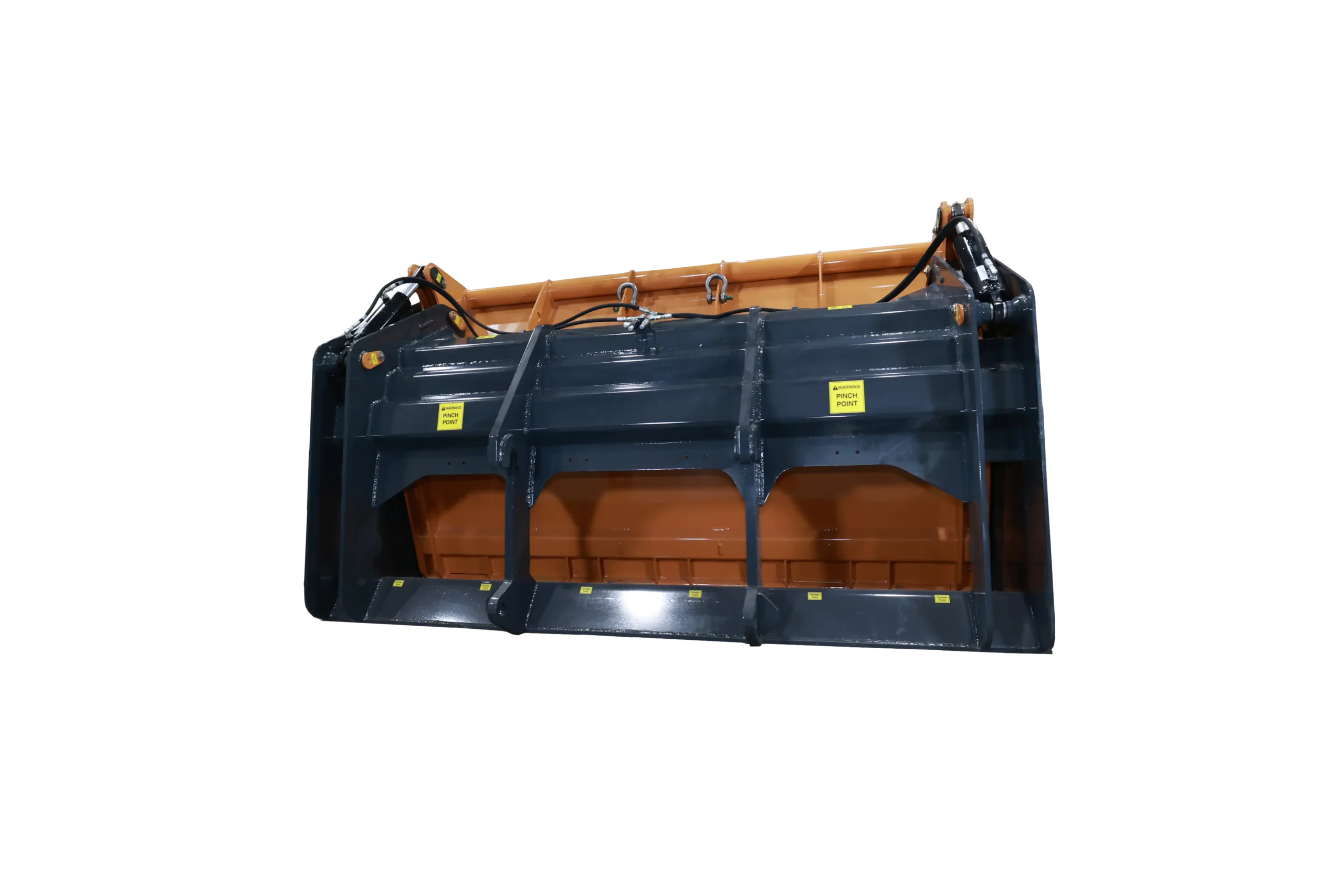
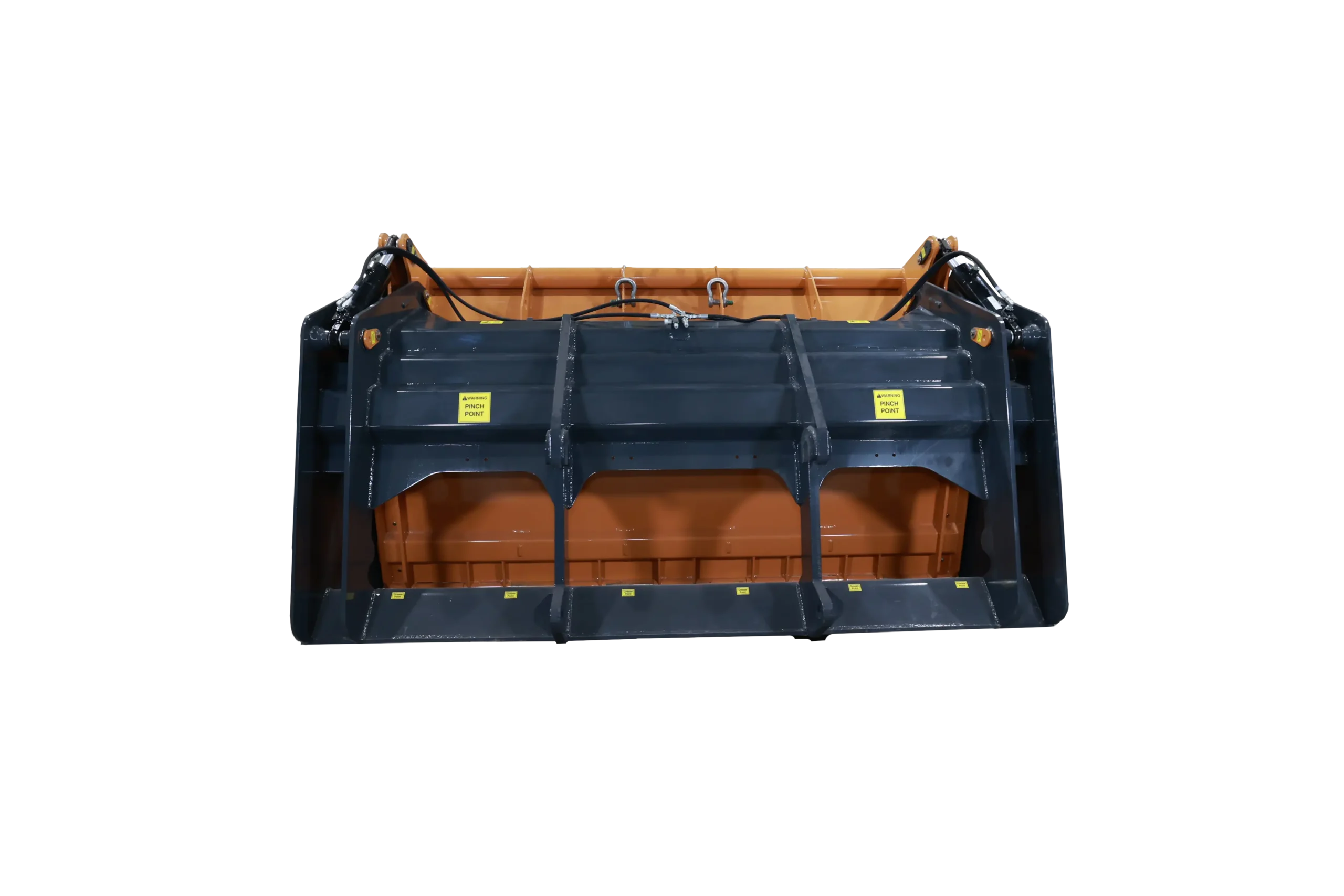
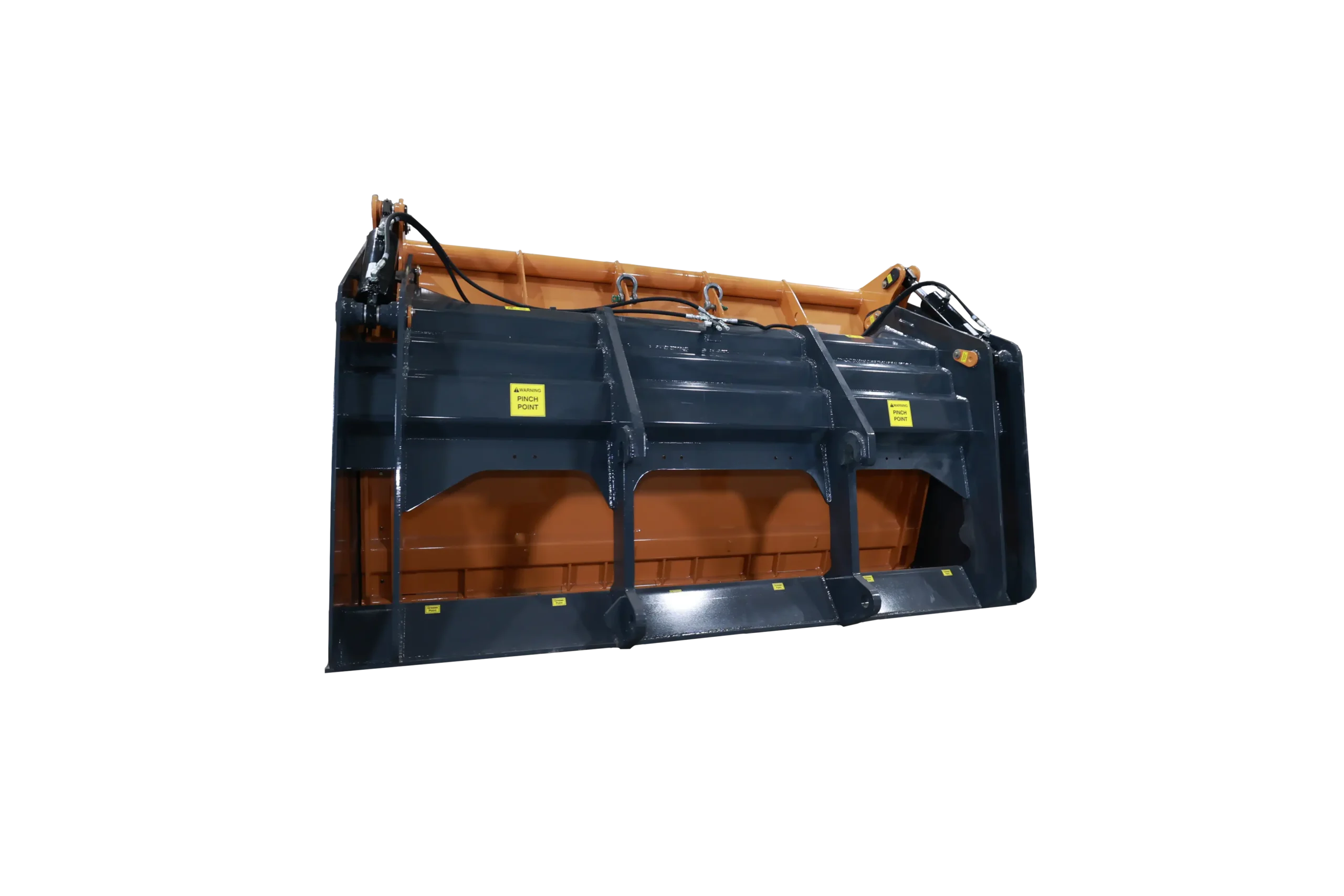
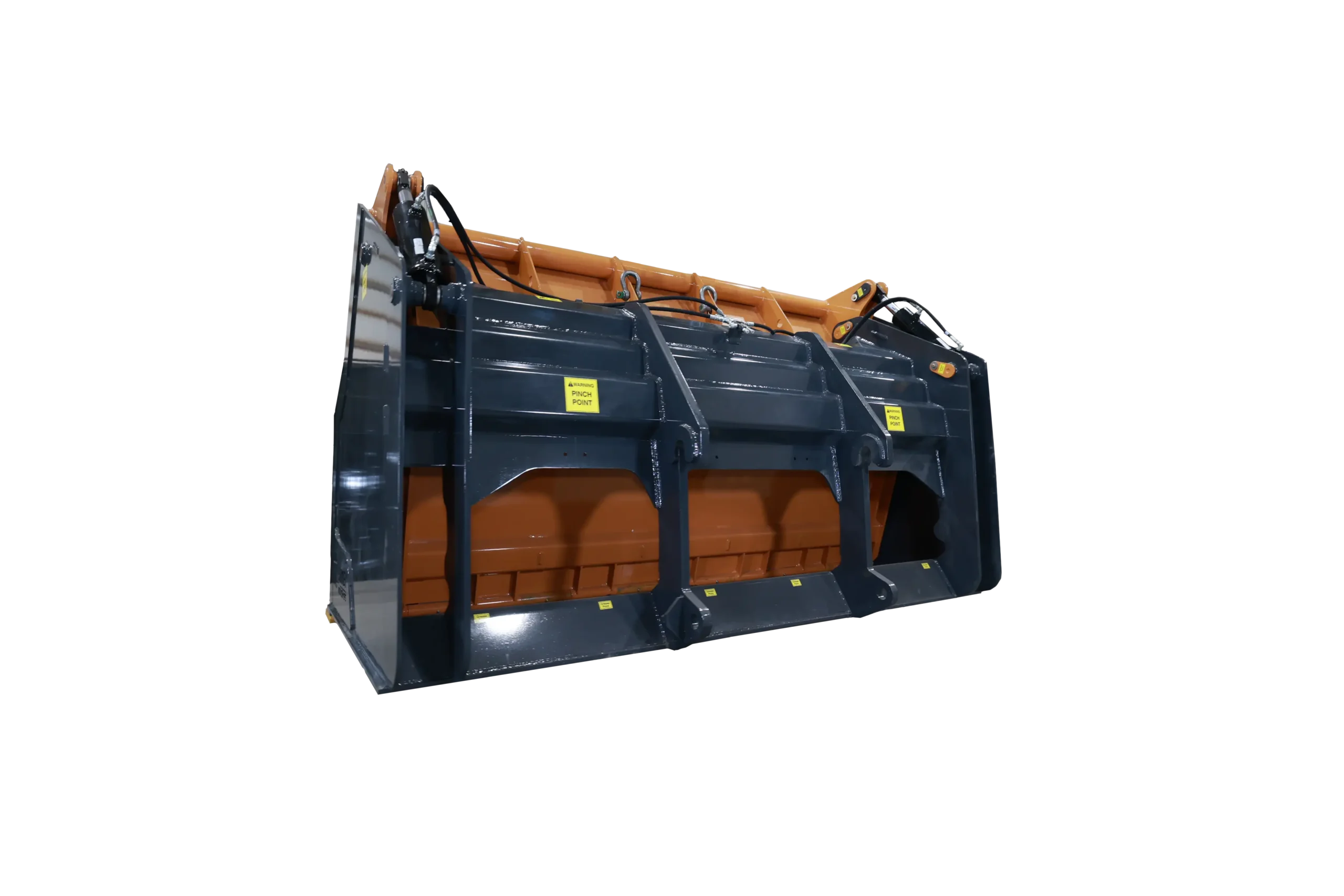
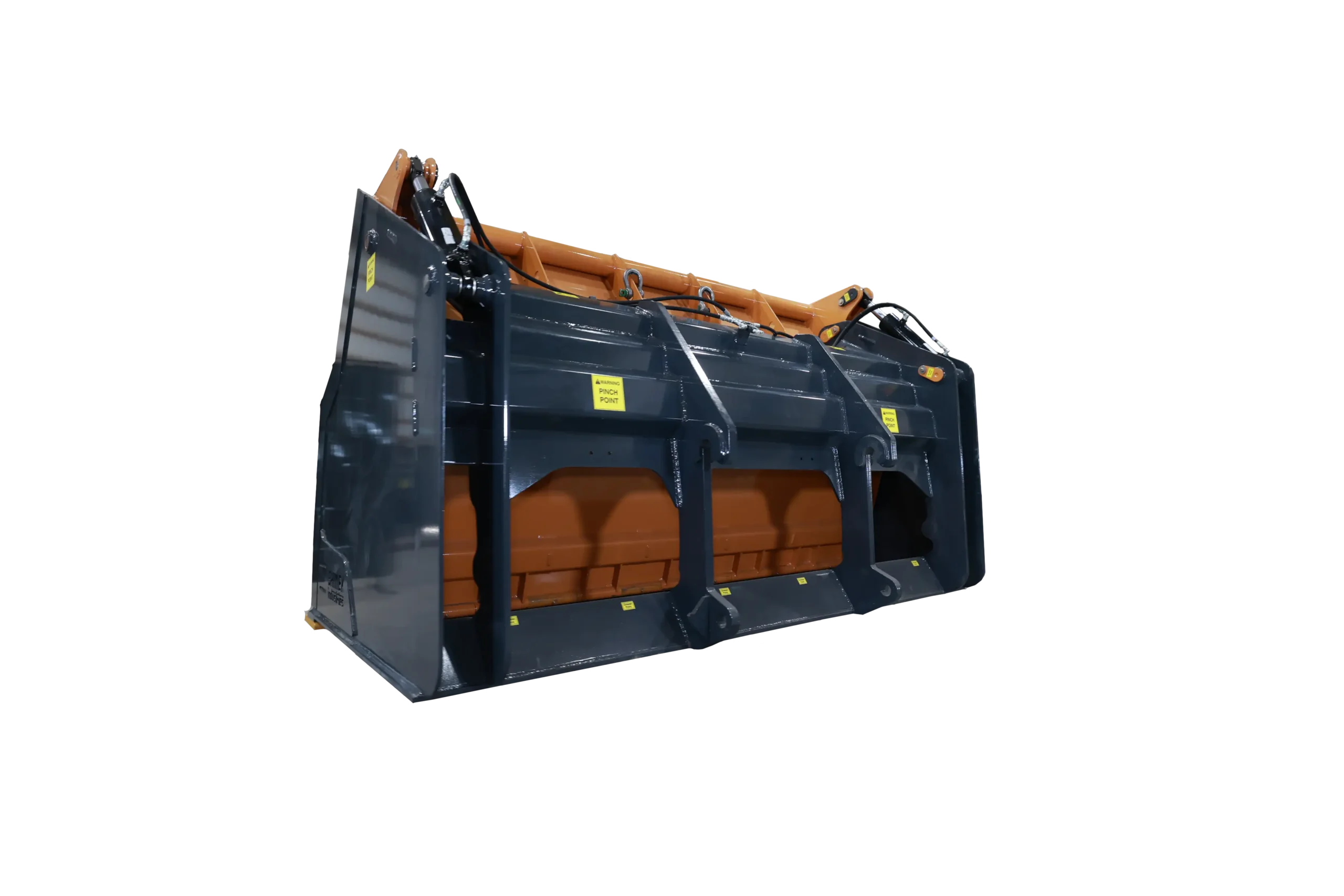
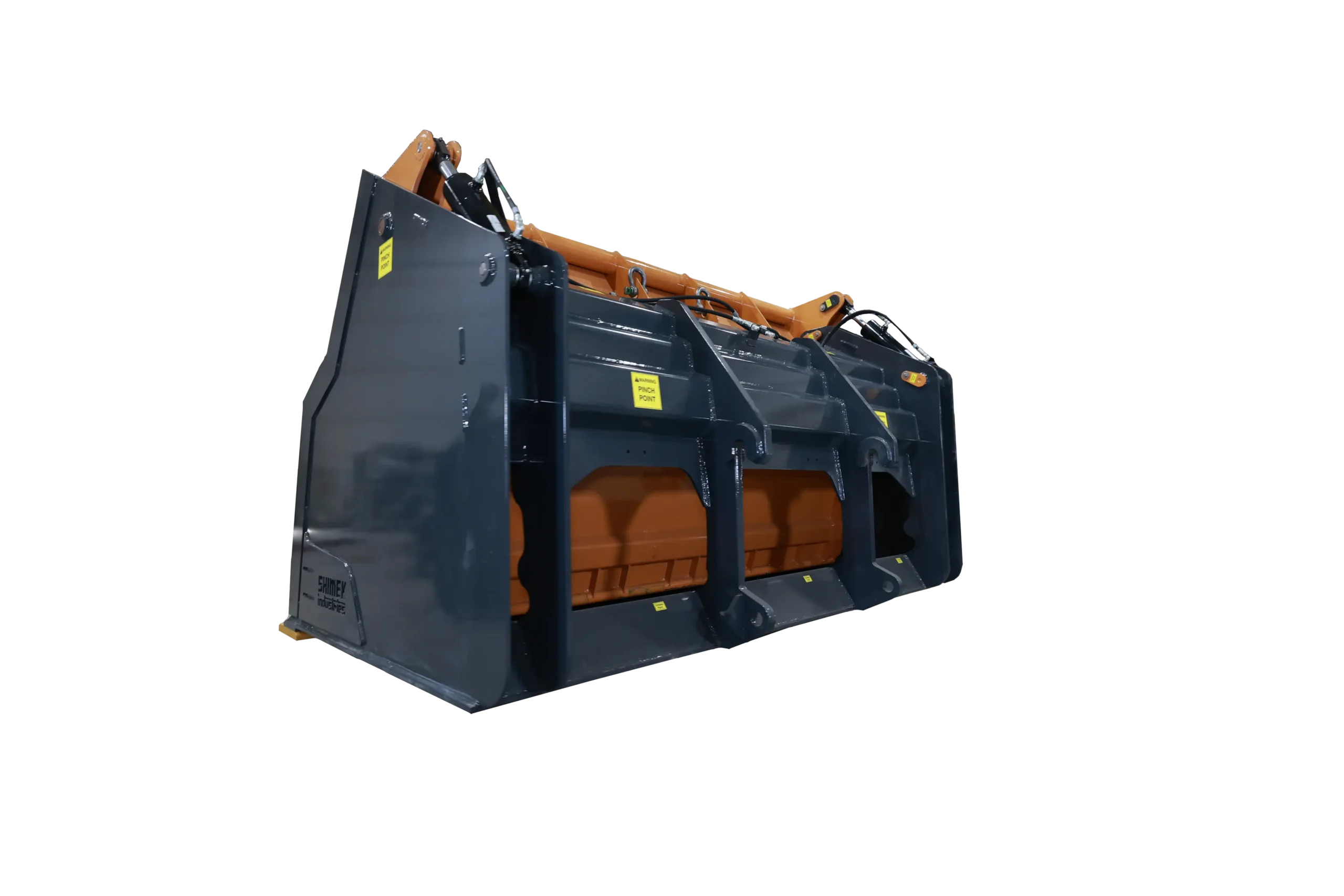
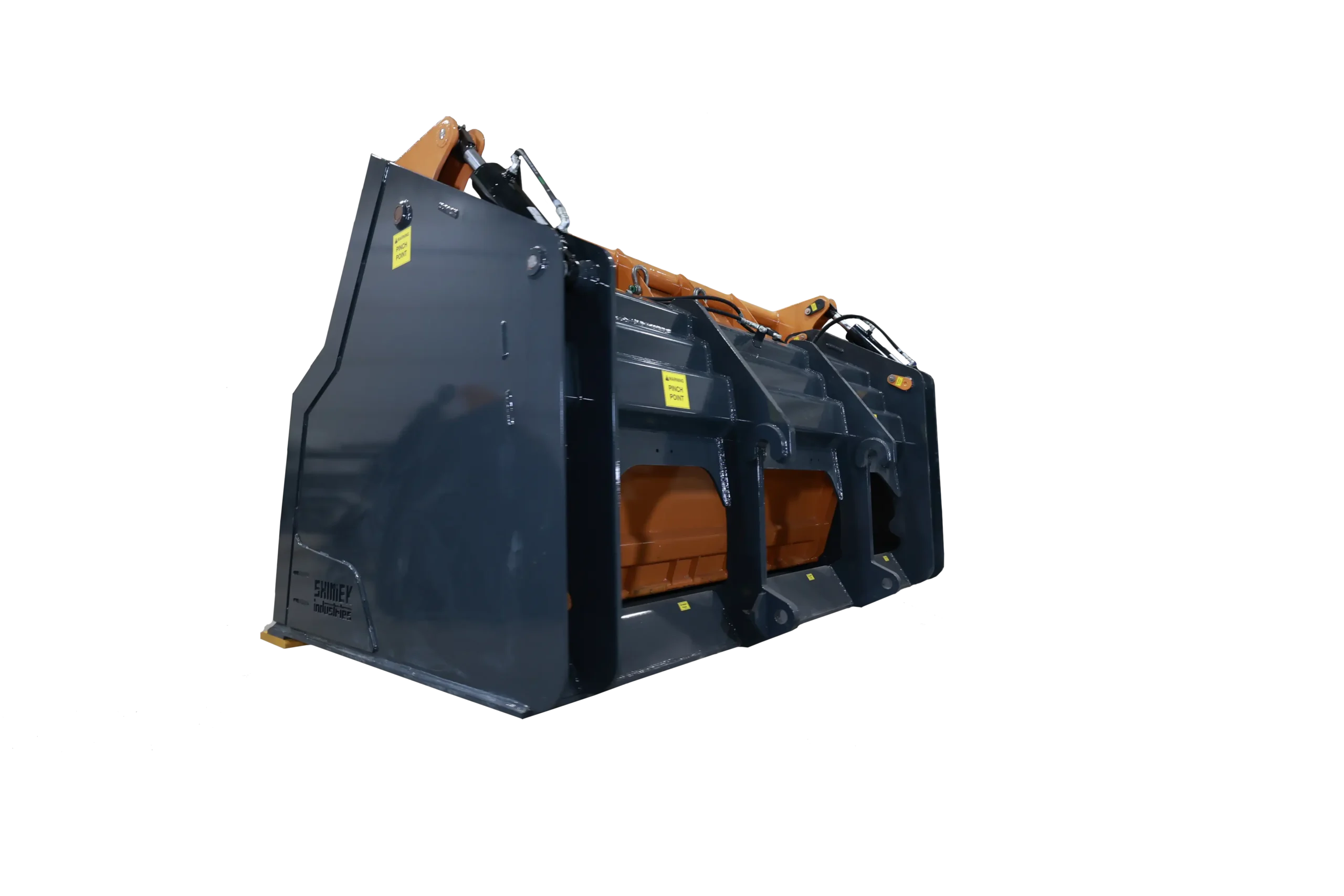
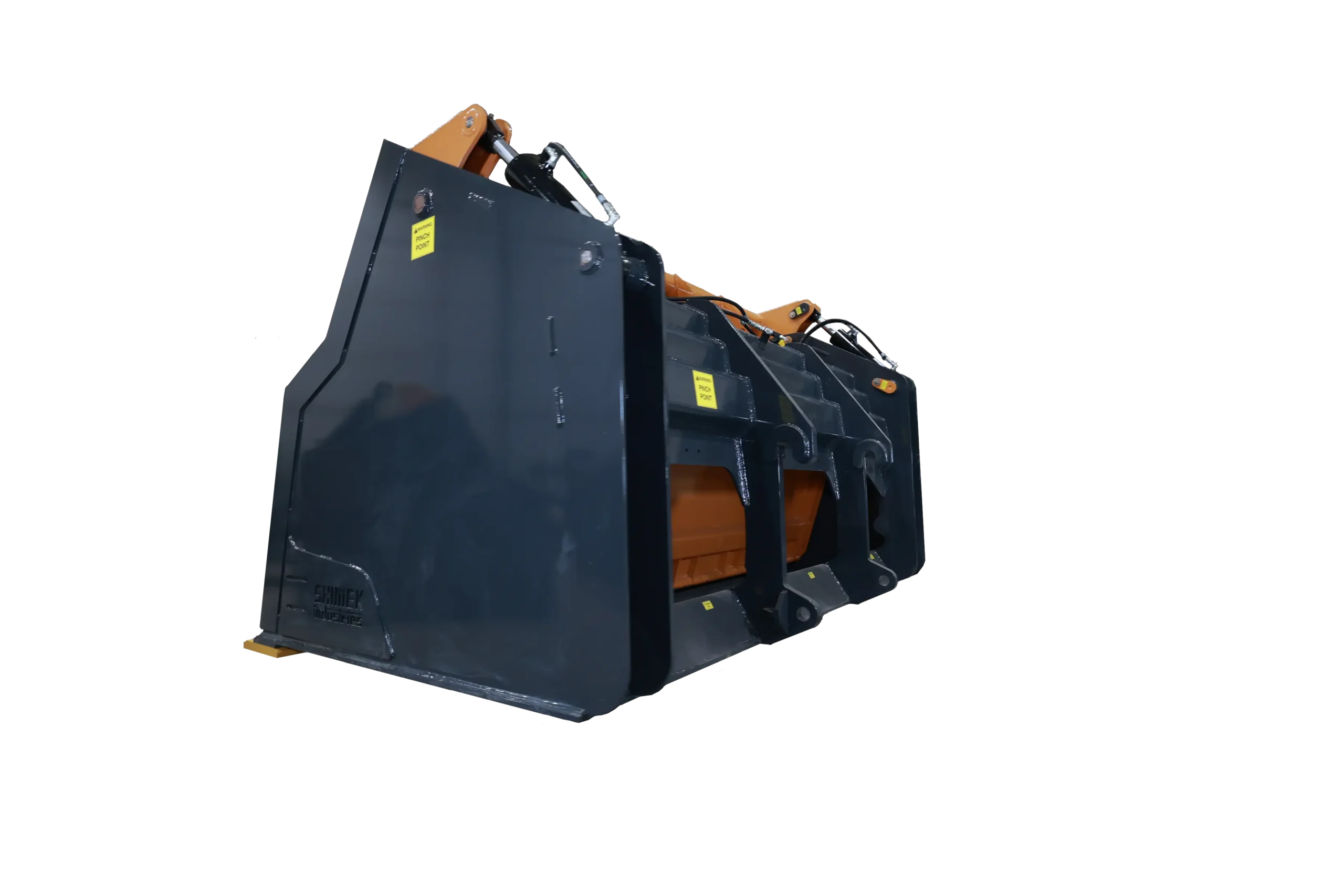
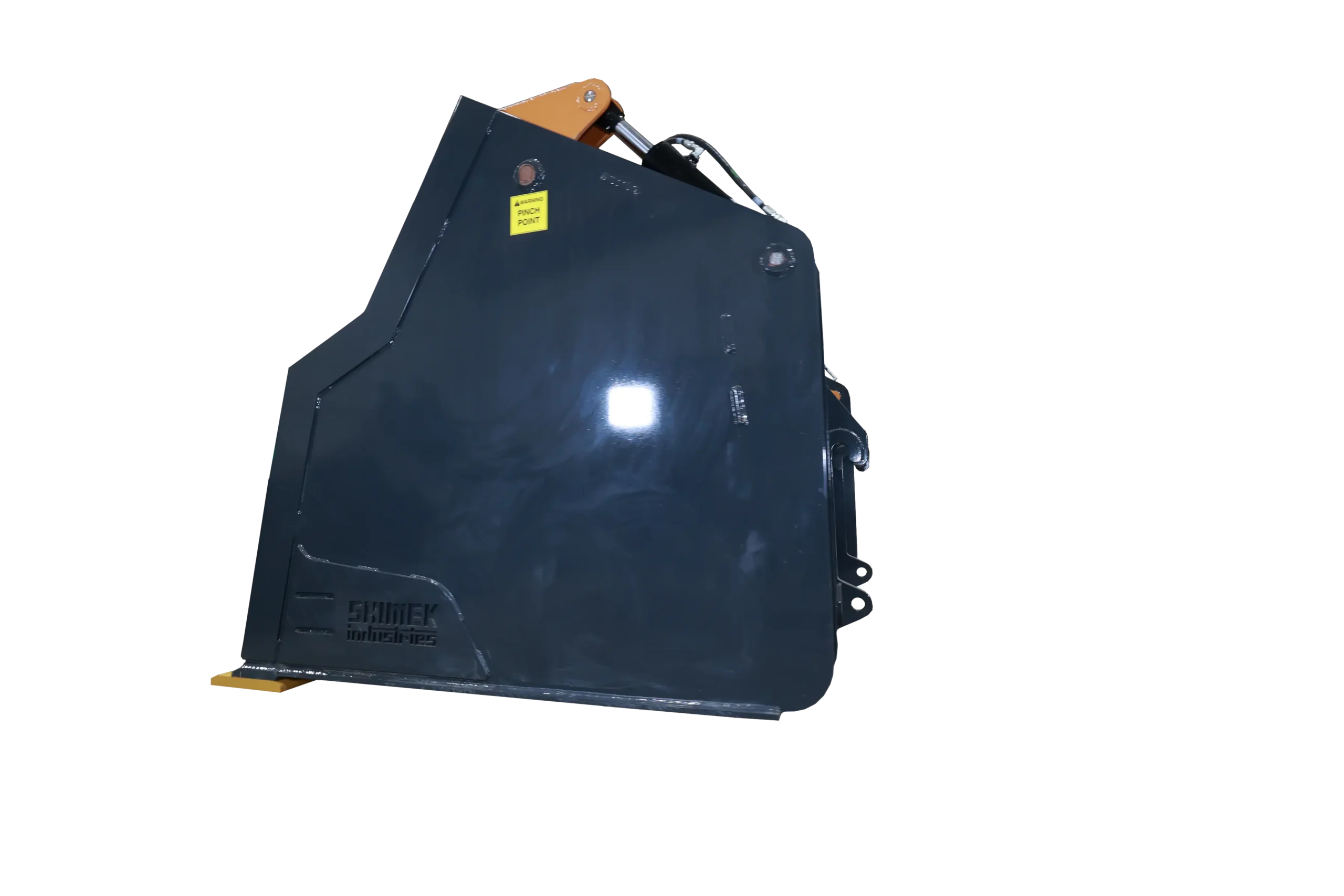
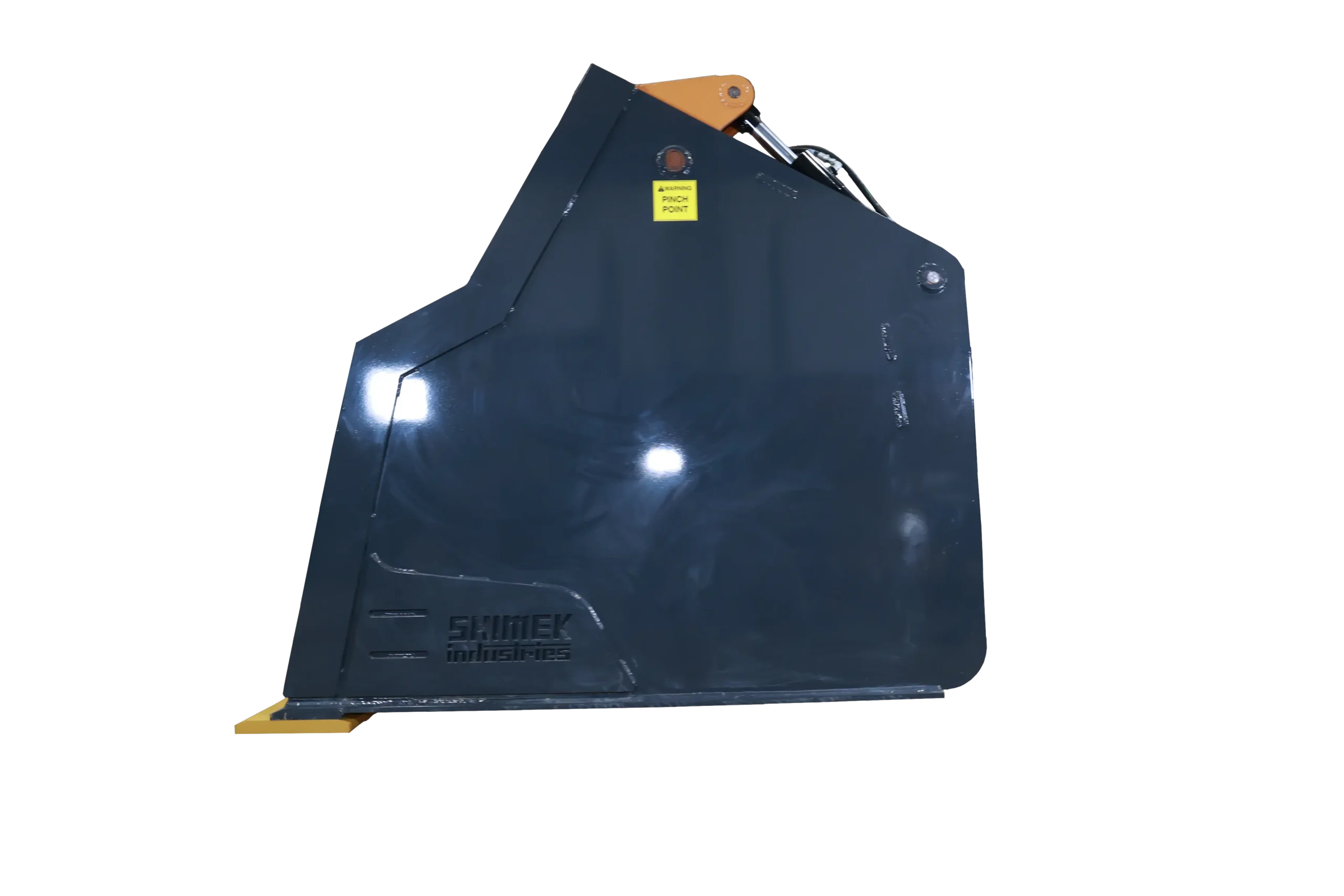
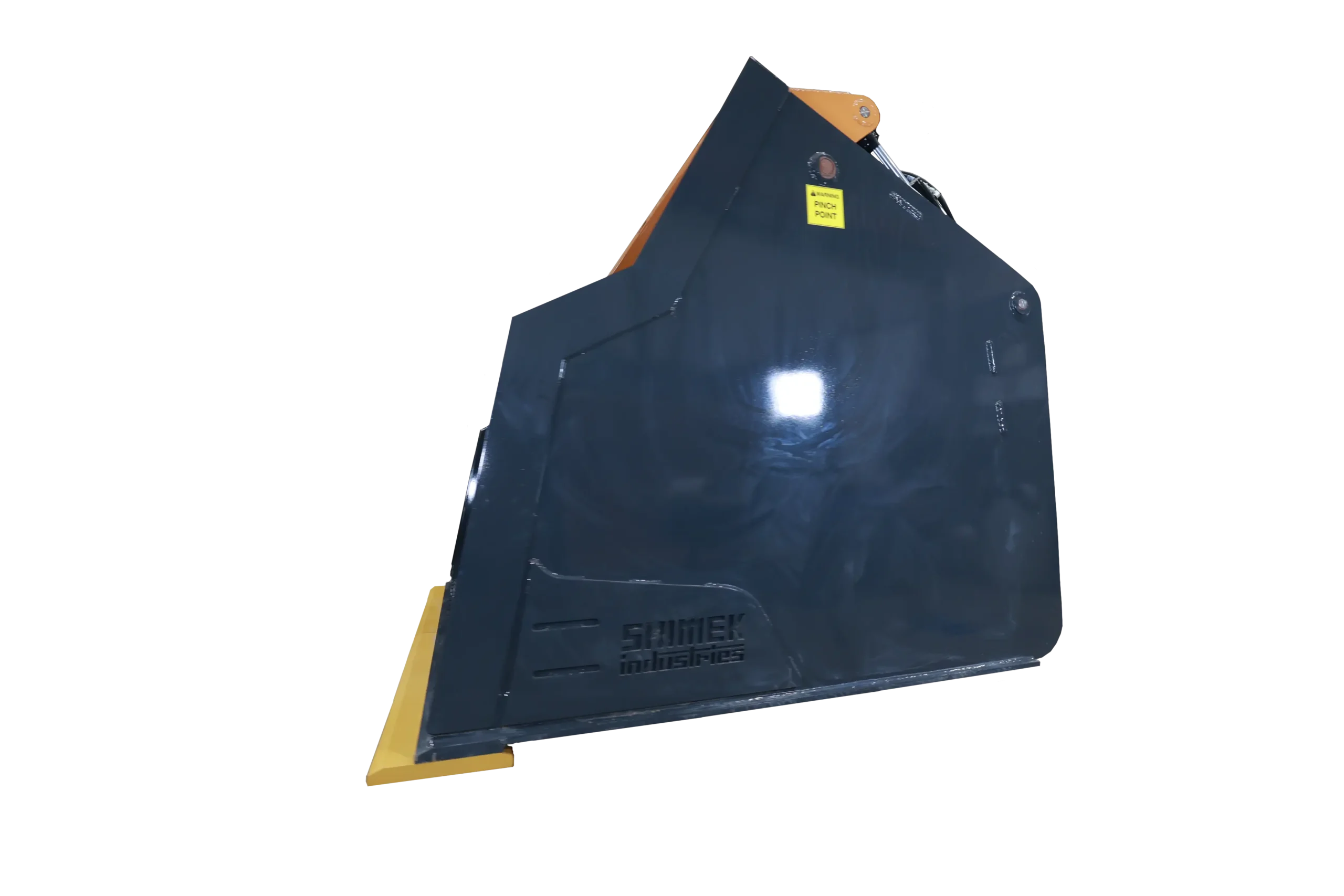
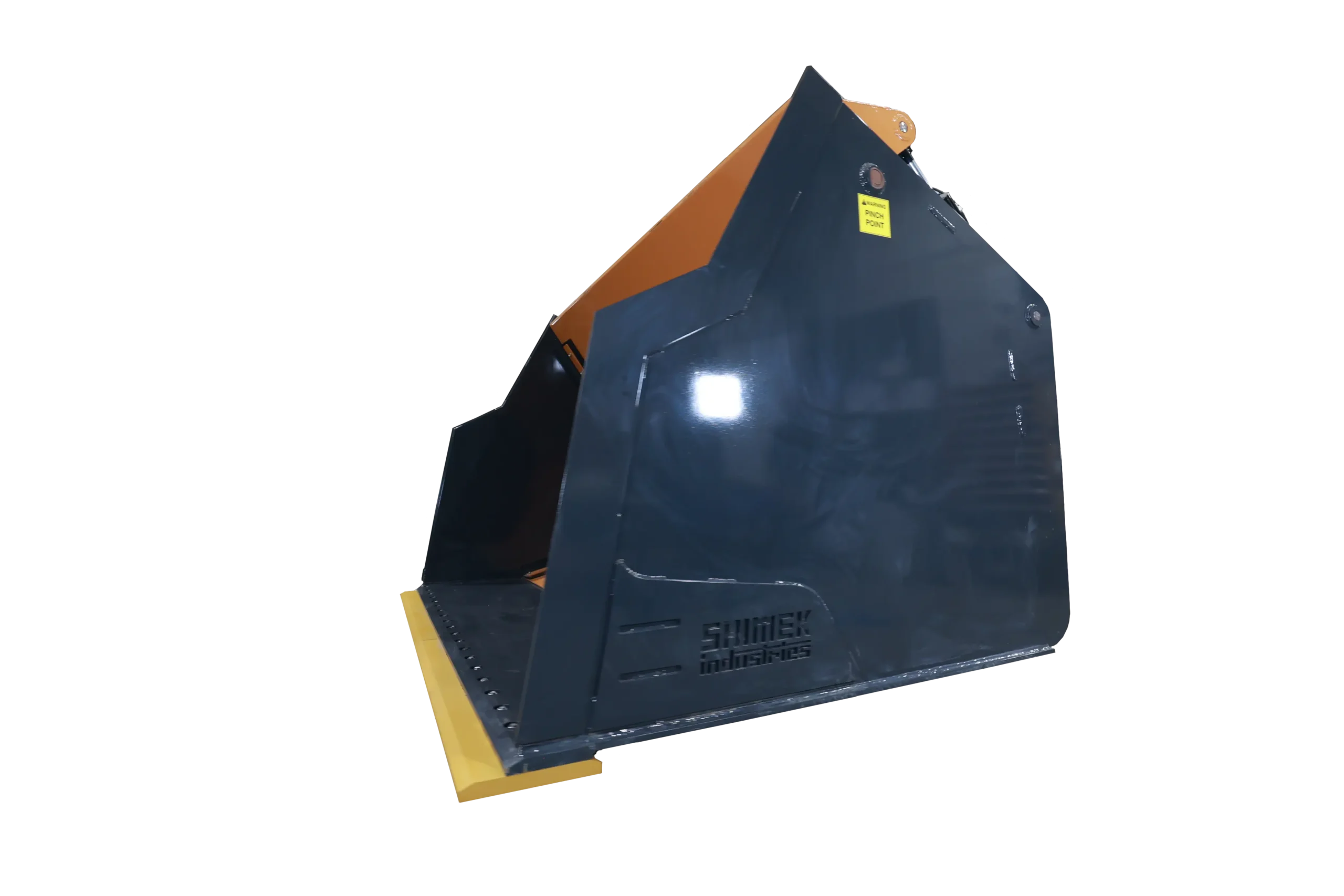
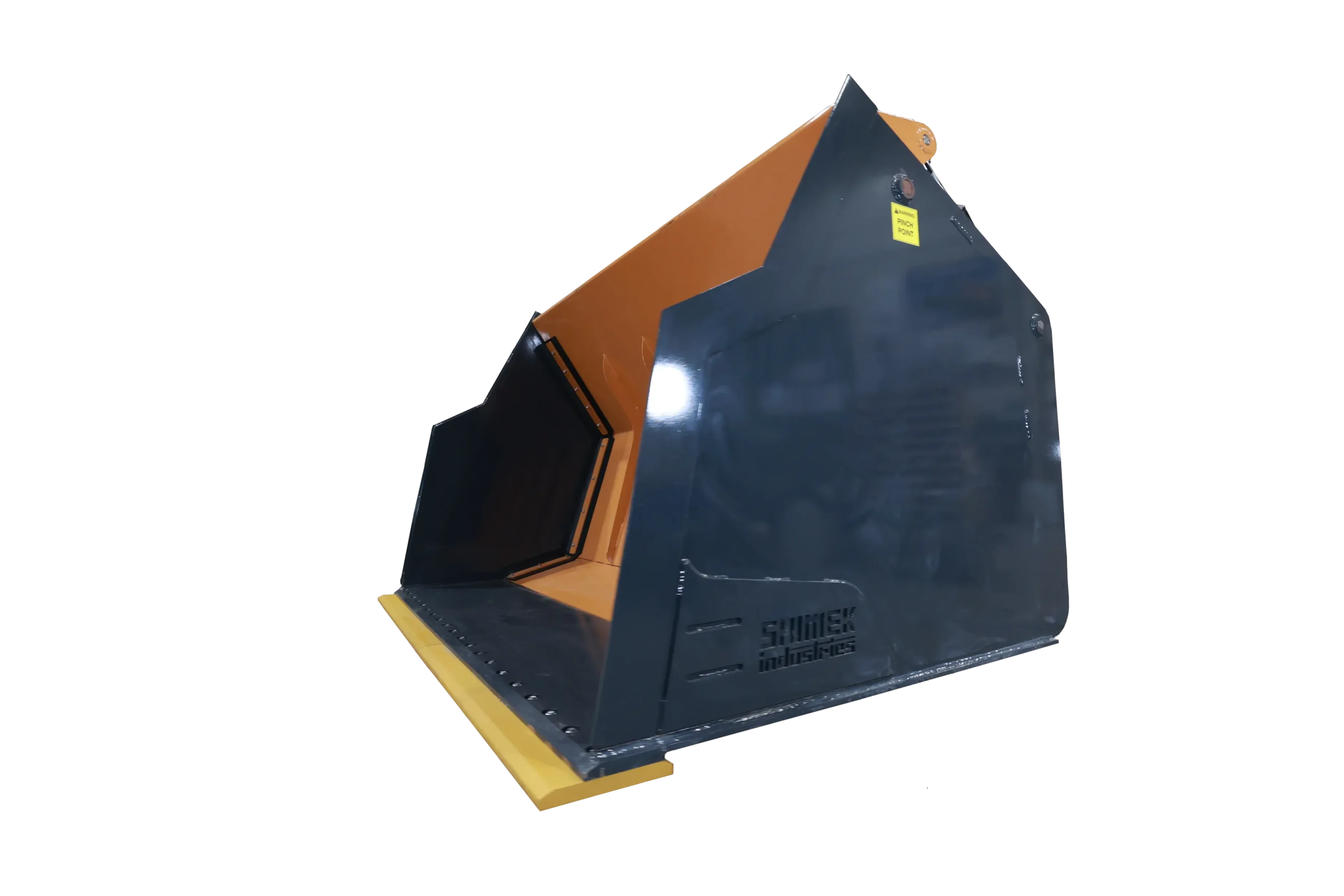
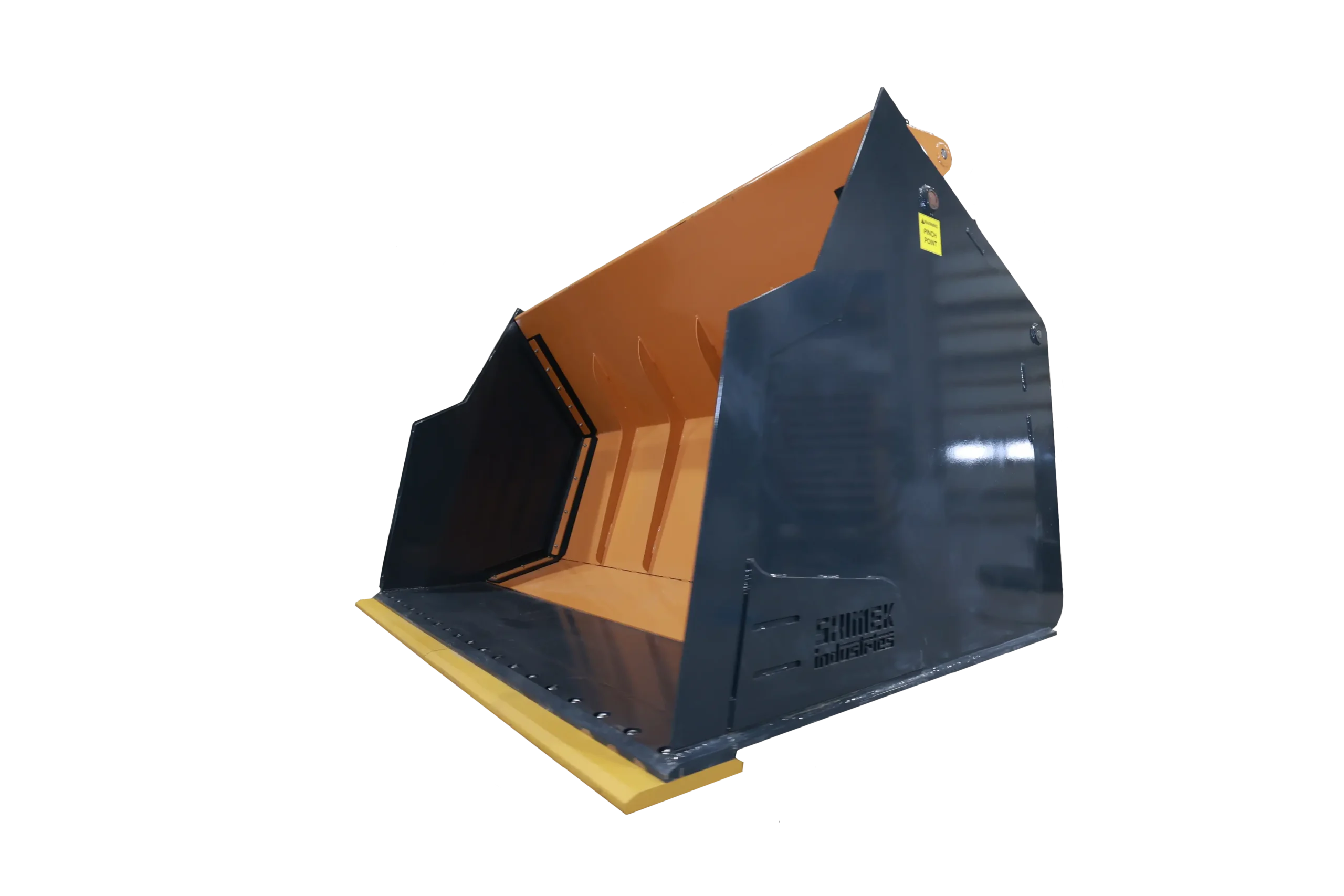
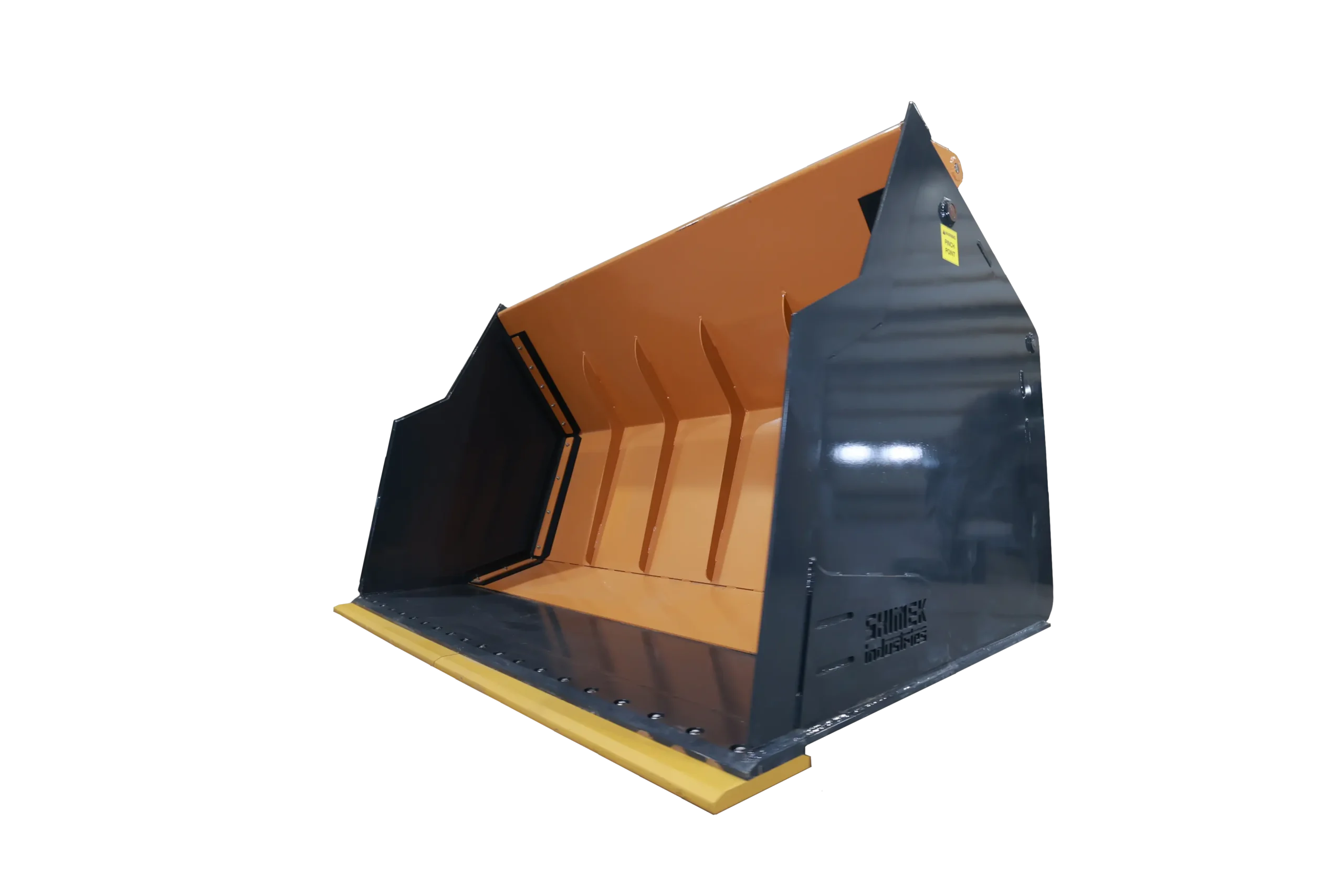
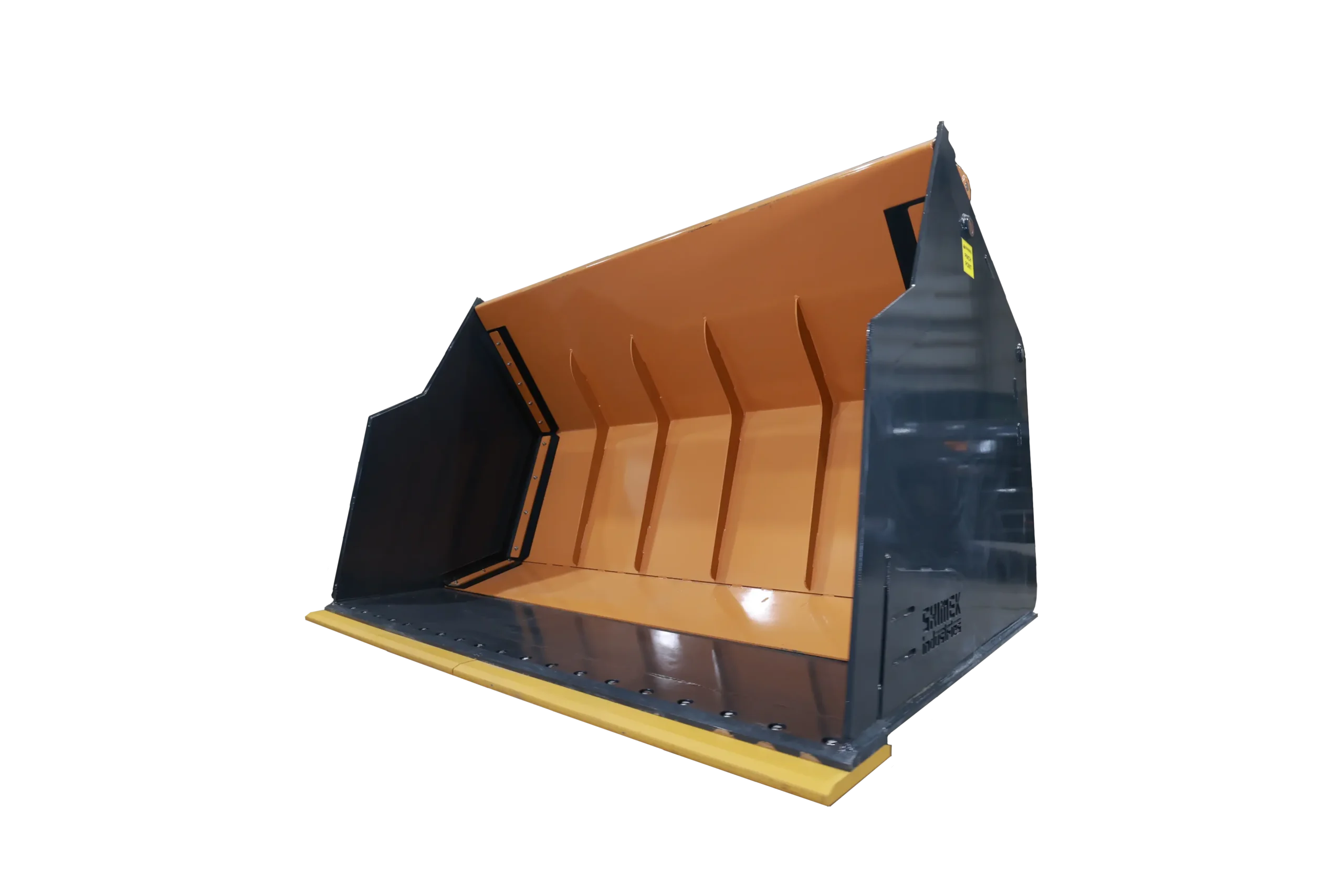
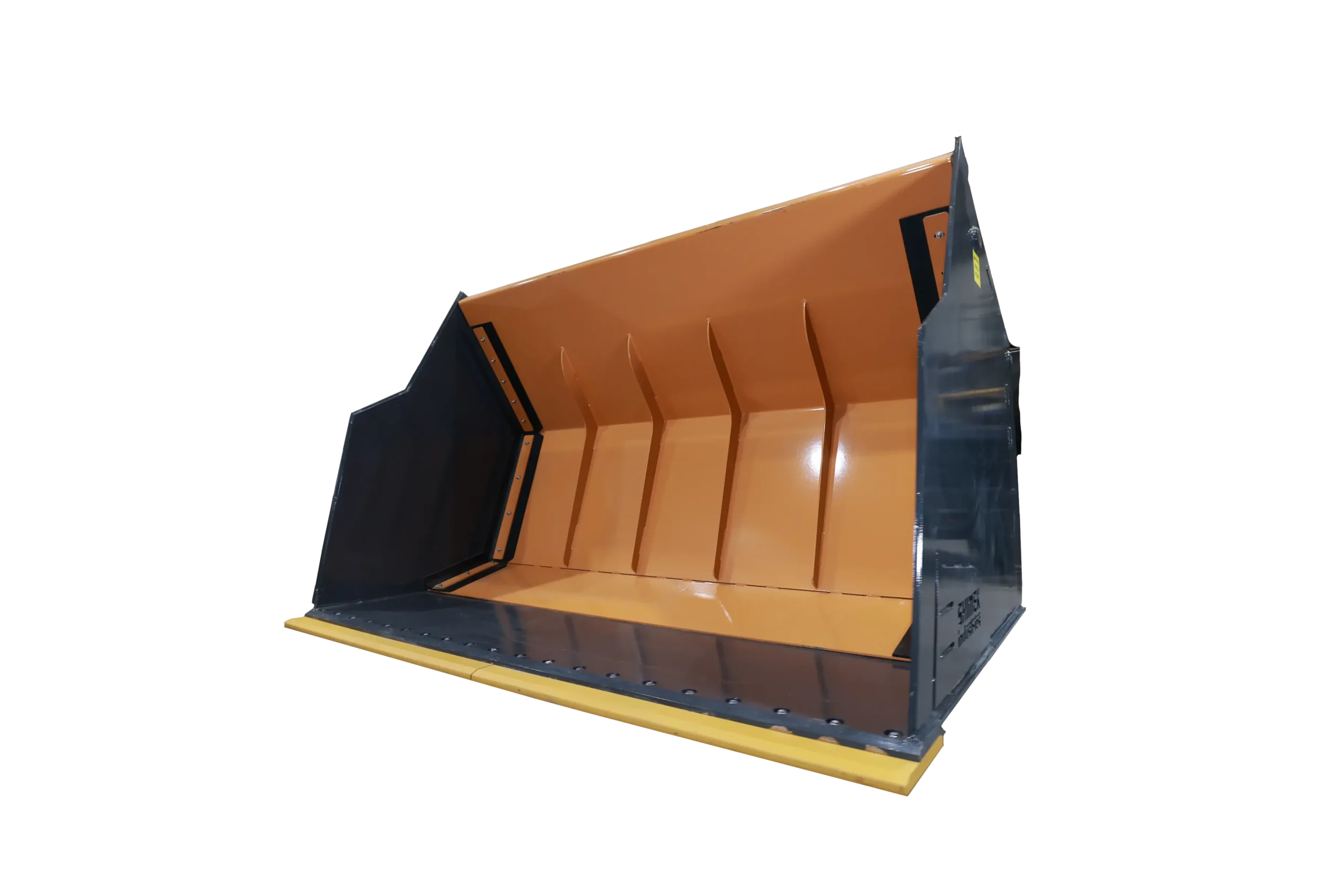
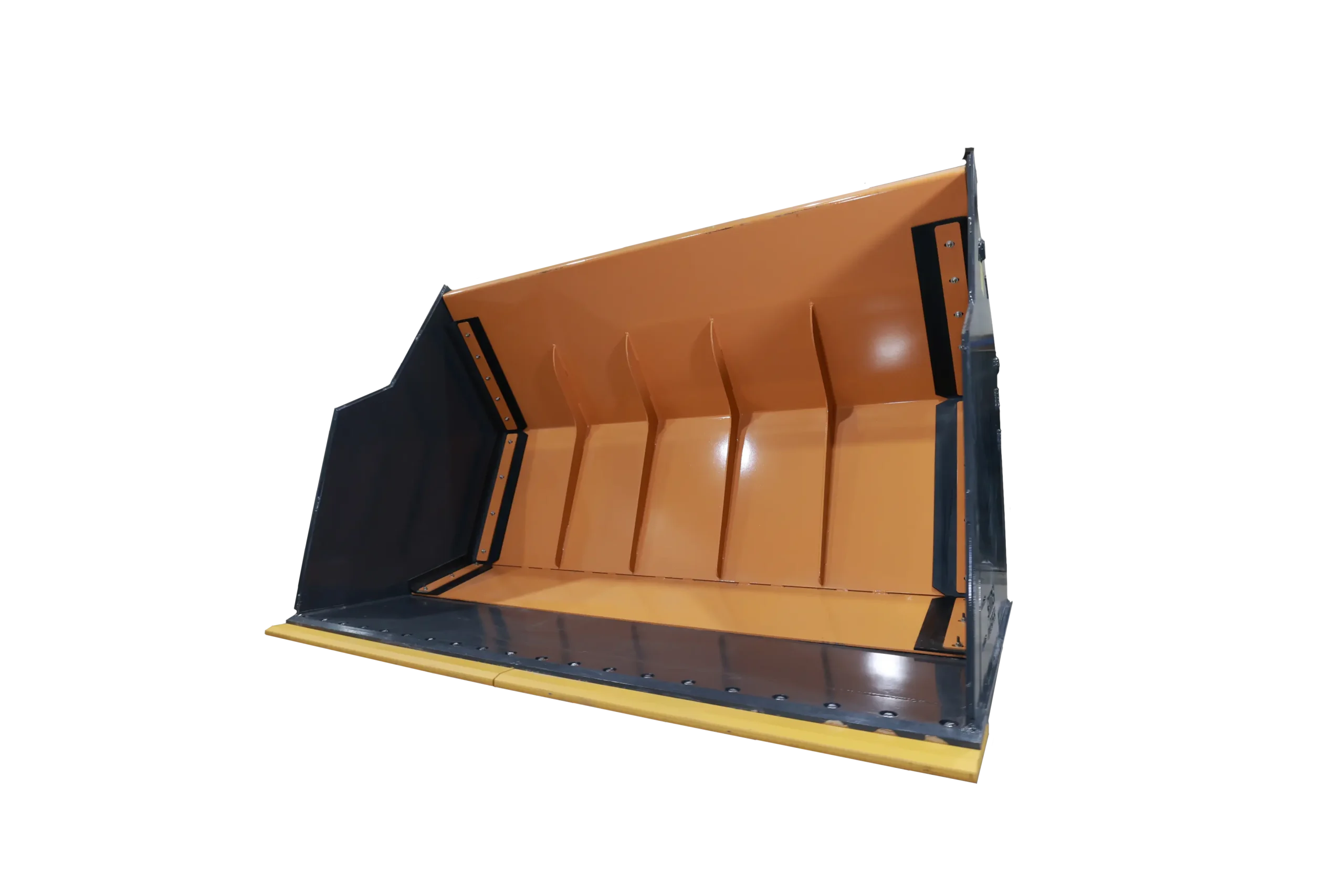
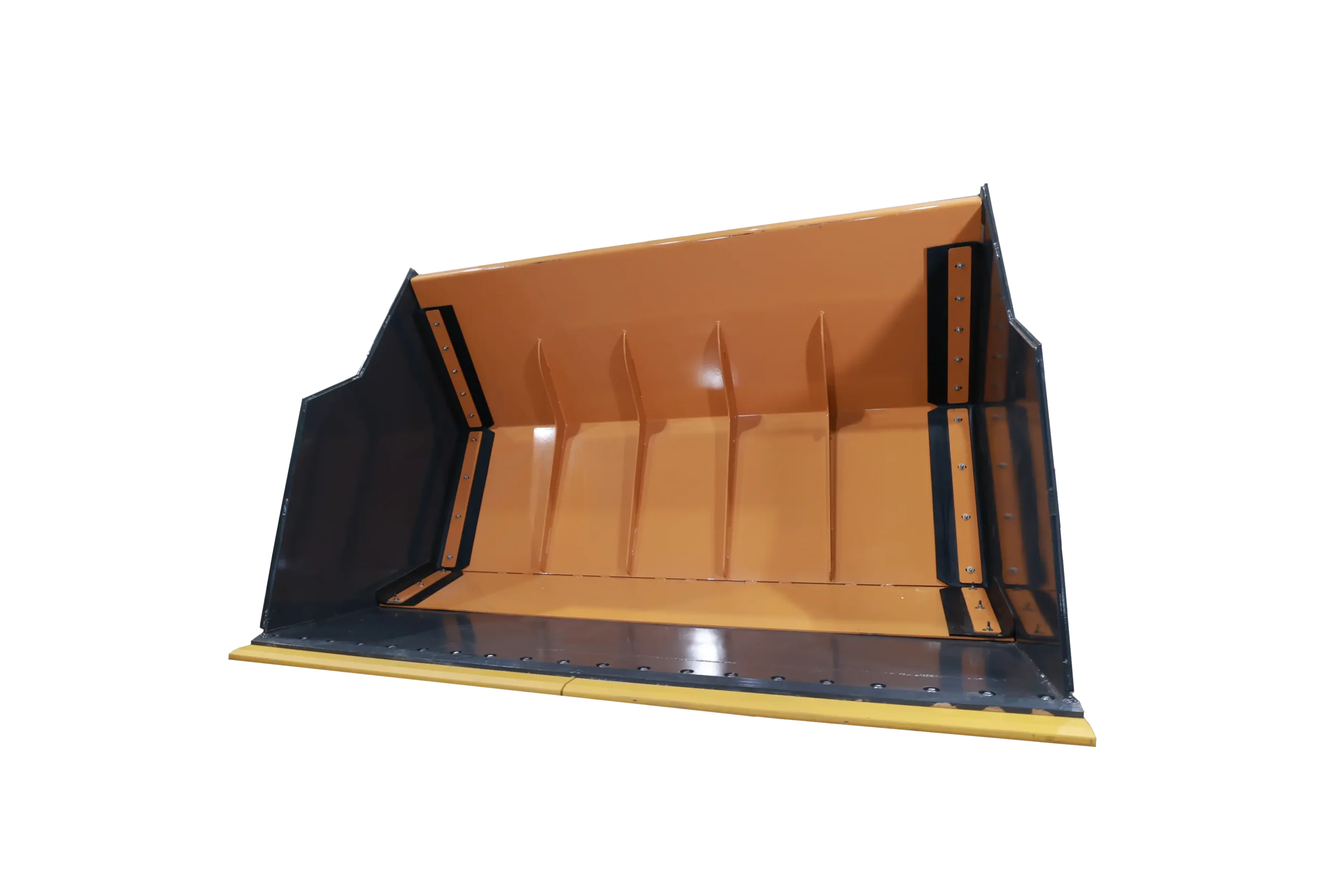
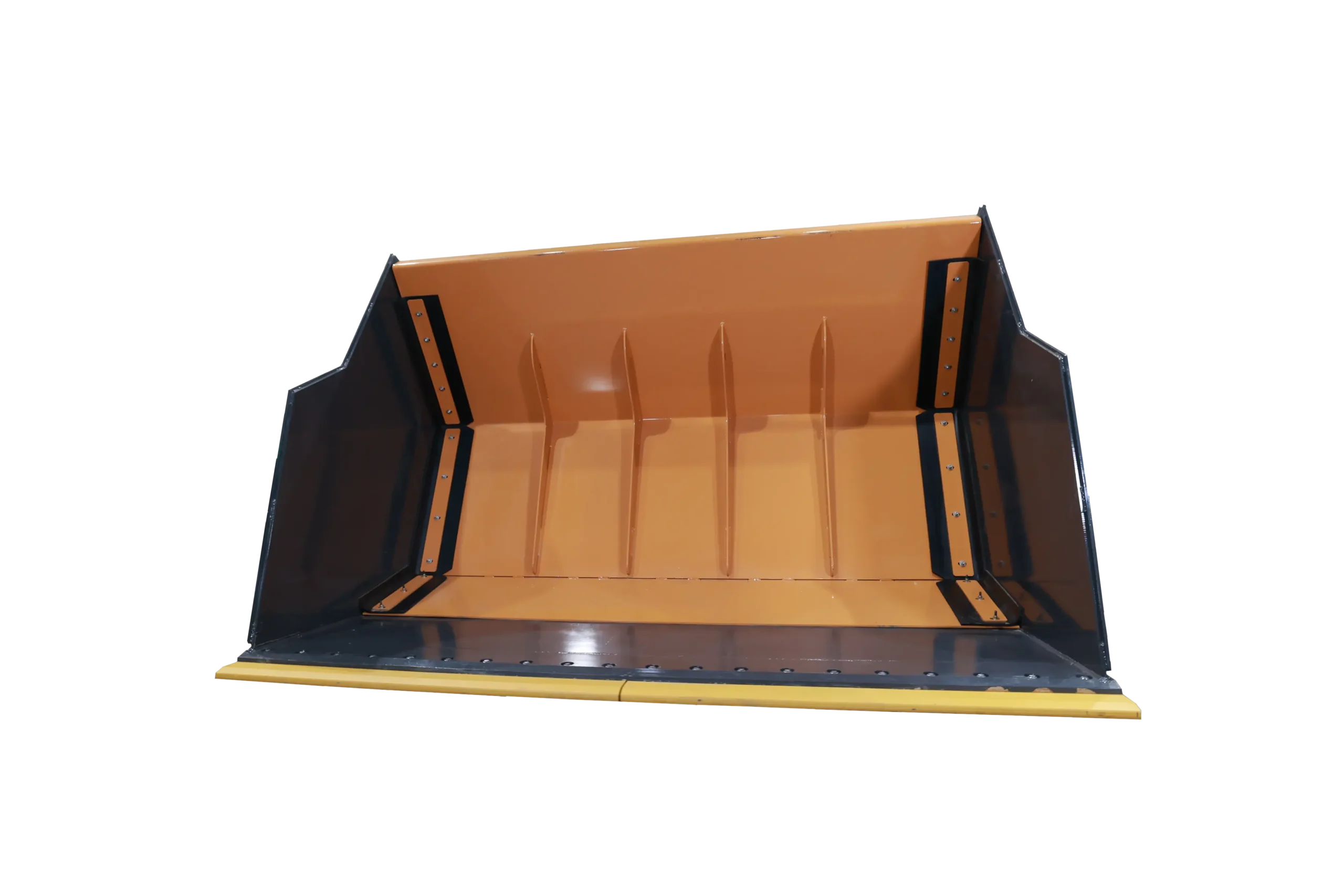
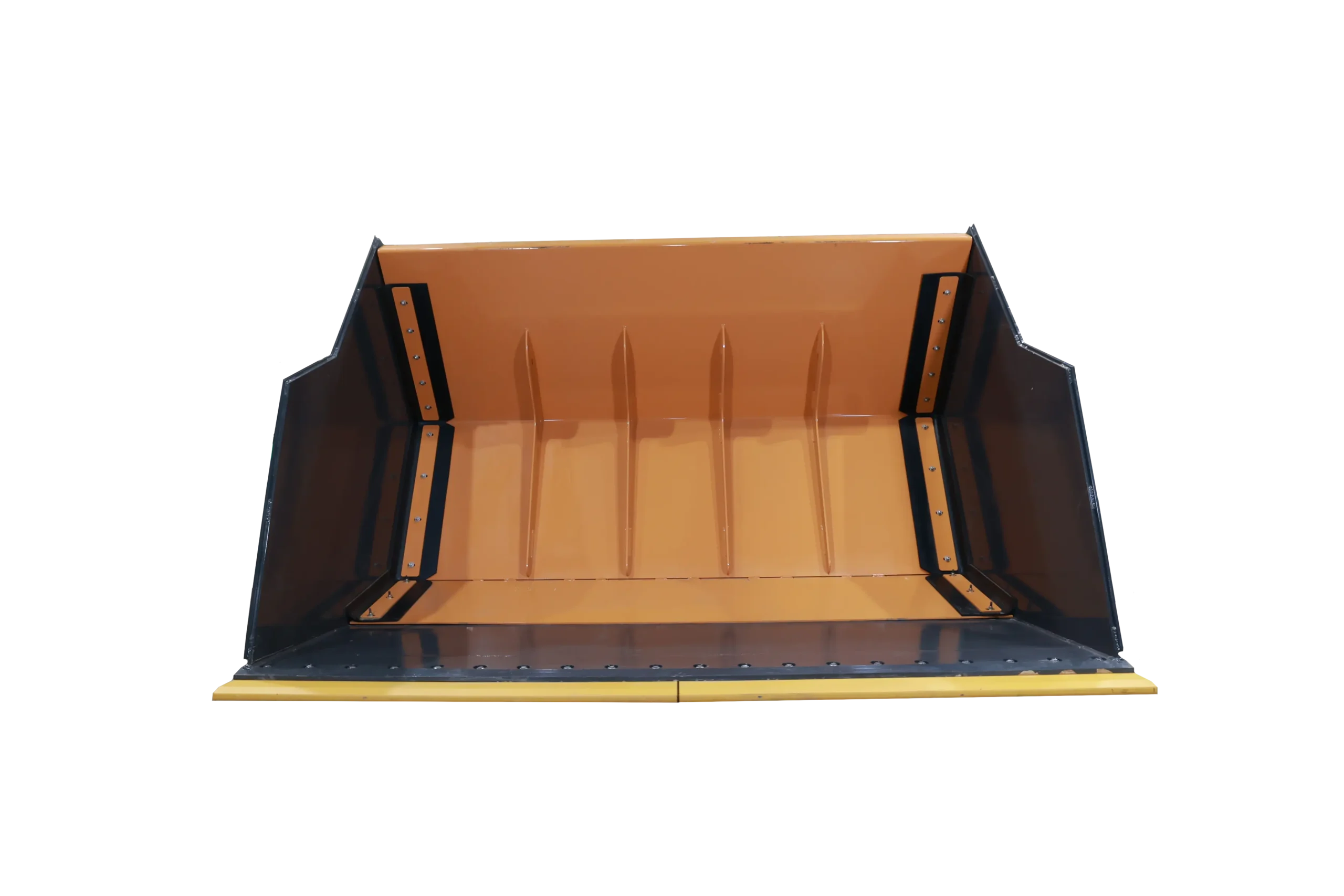
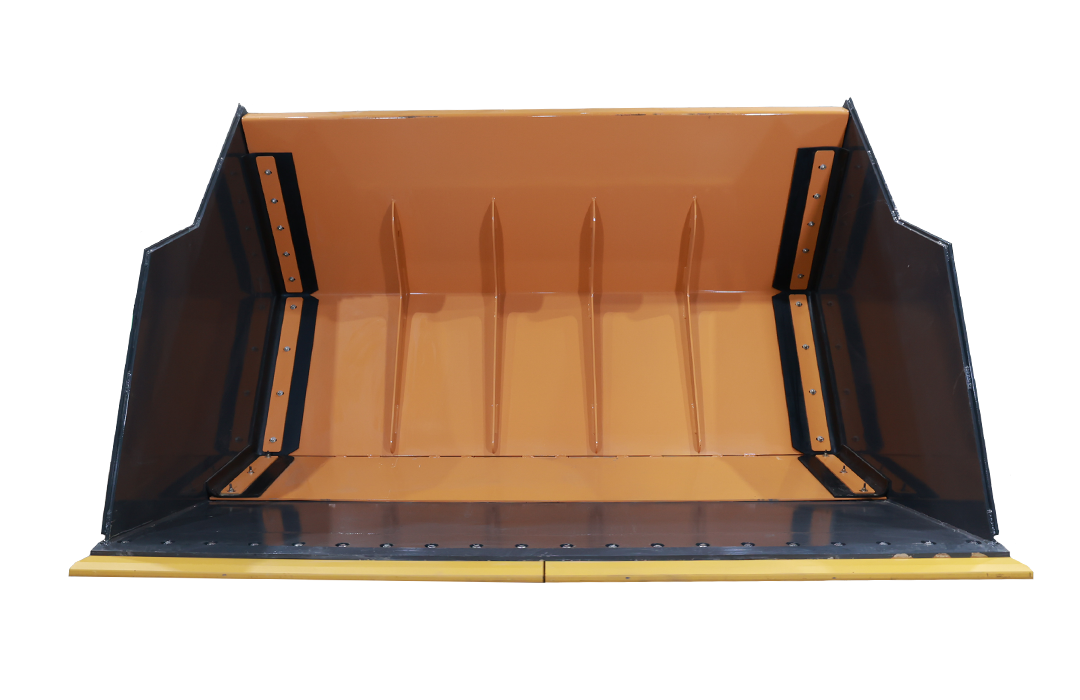
That is exactly why we designed the Shimek Ejector Bucket.
The problem with a standard bucket isn’t just height; it’s the “dump arc”. To empty a standard bucket, you have to tilt it forward. As the front dips down into the mixer, the back of the bucket swings up, often hitting the mixer wall.
A Shimek Ejector Bucket changes the geometry of feeding.
How the Ejector Bucket Eliminates the Need for High Lift
Instead of relying on gravity and a steep tilt angle, the Shimek bucket uses a hydraulically operated moving back wall to push the material out horizontally.
- Keep Your Digging Power: By sticking with the Standard Lift loader, you retain the machine’s maximum rated breakout force for digging into tough silage faces.
- Gain “Effective” Clearance: Because you eject feed horizontally rather than dumping vertically, you don’t need to raise the loader arms nearly as high to clear the mixer wall. You gain significant clearance without needing longer, weaker arms.
- Save the Purchase Price & Maintenance: Save the $15k upcharge on the loader. Plus, by keeping the load closer to the machine’s center of gravity, you reduce stress on the loader’s frame and hydraulics.
- Stop Banging Your Mixer: We see it constantly: operators banging the loader arms against the mixer rim to shake out sticky feed. This destroys scales and dents tubs. A Shimek Ejector Bucket pushes feed out smoothly and completely—no banging required.
Conclusion
The charts tell the story: High Lift is a compromise. You gain height, but you often lose digging power and stability, all while paying more upfront.
When weighing the Standard Lift vs High Lift Wheel Loader options, remember that a standard lift loader equipped with a Shimek Ejector Bucket is often the more powerful, stable, and cost-effective way to feed.
Don’t compromise your loader’s performance. Contact Shimek Industries today to find the right ejector bucket for your operation.